
#25 When One Class Is Not Enough
Every example in this series is one class, and for the screens it is about that is the right size. Real applications grow past it — and the honest question is what the seams are, because a framework that has no answer here produces one 4,000-line class and a maintainer who resigns.
There are four seams, and each one is ordinary ABAP.
One class per screen. The unit of an abap2UI5 app is a screen with the
logic behind it. A master list and a detail screen over different data are two
classes, connected by the stack from
#18: the list calls the detail
with nav_app_call( ), the detail returns with nav_app_leave( ), and the list
reads the result through get_app_prev( ). Each class is small enough to read,
and each has a main( ) of its own.
Popups and value helps as classes. A confirmation dialog, a value help, a
settings popup used from several screens — each is a z2ui5_if_app that
displays into the popup slot. Written once, called from anywhere, tested on its
own.
The logic in a class that has no screen. A zcl_invoice_service with
read( ), validate( ) and post( ) is where the business logic goes when a
second screen needs it, or a batch job does, or a test does. The app class
becomes what a dynpro program's PAI modules were: it takes the event, calls the
service, updates the attributes. One thing to know, and it is the sort of thing
that is obvious in hindsight: a reference held in an attribute is serialized
with the instance, so a helper either implements if_serializable_object and
stays small, or is created fresh in every main( ) — which is usually the
better answer anyway.
Parts of one screen as nested views. A master-detail layout, a tab strip,
a side panel — nest_view_display( ) puts a view built in ABAP into a named
slot of the main view, and rebuilds only that slot later. The page stands, the
part changes.
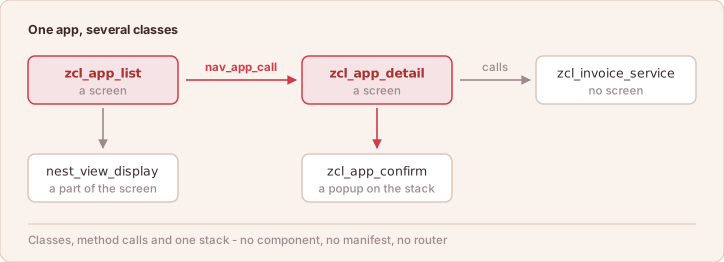
One app, several classes: a screen per class, a service without a screen, a popup on the stack.
What does not appear in that list is a single framework concept. No component, no manifest, no router, no controller hierarchy, no dependency injection container. The seams are classes, method calls and one stack — which is exactly what a larger ABAP program has been made of for thirty years.
A larger app is more classes. The unit stayed the same size.