
#8 Only the Changed Part
If the backend sends the view on every request — #5 — does the screen rebuild itself on every click?
It would, and the user would notice within about two seconds. A rebuilt view is a new set of controls: the cursor leaves the field, a half-typed entry is gone, the table scrolls back to the top. Nobody wants to type into that, and no amount of "but the architecture is elegant" survives a user typing a customer name three times.
So the view is not sent every time. Sending it is a decision the app makes:
  METHOD z2ui5_if_app~main.

    me->client = client.

    IF client->check_on_navigated( ).
      set_view( ).          " first display, and every return from a sub-app
      RETURN.
    ENDIF.

    IF client->get_event( ) = `COUNT`.
      count = count + 1.    " changes the model - and nothing else happens
    ENDIF.
    " no set_view( ) here: the response carries the model alone

  ENDMETHOD.
count is a public attribute bound to a Text in the view. Every press of
the button runs main( ), and main( ) changes a number and returns.
When set_view( ) is not called, the response carries the model alone. The view
in the browser is the one already standing, and UI5 does what UI5 does with a
changed model: data binding updates the controls bound to what changed, and
touches nothing else.
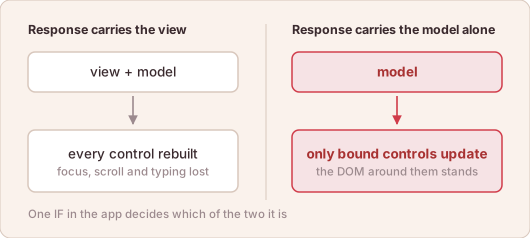
What a response carries decides what survives on the screen.
The DOM is not rebuilt. Focus stays in the field. The scroll position holds. The value the user is halfway through typing survives, because the input control was never replaced — only its bound value was.
This is what the Over-the-Wire frameworks outside SAP do with HTML fragments, and the pleasant part is that UI5 gives it away for free, through a mechanism that was in the framework long before this one existed. No diffing algorithm, no virtual DOM, no reconciler — just a model that changed and a binding that noticed. Data binding was doing this while the JavaScript world was still inventing names for it.
Sending the whole view is the exception, not the rhythm.