#23 From ITS to abap2UI5
Worth laying out end to end, because the shape of it is not what most people remember.
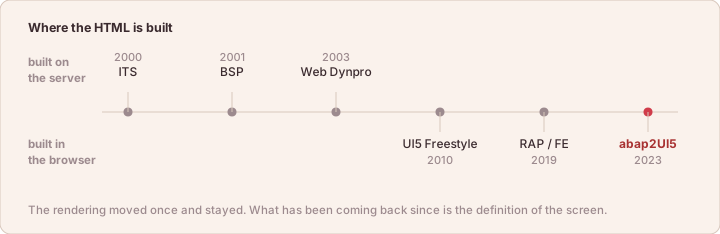
ITS, 2000. Dynpro screens rendered as HTML by the server. Every interaction a full page from the server. Still in warehouses today, on scanners.
BSP, 2001. HTML and JavaScript written inside the ABAP stack, with ABAP embedded for logic. Server-side rendering again, with real control over the markup.
Web Dynpro, 2003. Views, context and controllers defined in ABAP. A component model rather than a page model — and still the server building the HTML.
UI5 Freestyle, 2010. The rendering moves. JavaScript, XML views and UI5 controls run in the browser; the backend delivers data through OData and stops having an opinion about the screen.
RAP and Fiori Elements, 2019. The UI definition returns to ABAP as CDS annotations, and a runtime in the browser turns them into the app.
abap2UI5, 2023. The backend sends the XML view itself, and a static UI5 app renders it.
Twenty-three years, and the one move that did not reverse.
Read as a line, it is not a march away from the server. For the first ten years ABAP built the HTML. Then rendering left for the browser, where it stays — because that is where a modern UI belongs, and nobody is proposing otherwise. What has been moving back ever since is not the rendering but the definition of the screen: first as annotations, then as the view itself.
Which makes Over-the-Wire less of a new idea than a returning one, arriving with the part the old server-rendered world never had — a real control library in the browser.
The screen went to the browser and stayed. The decision about the screen came home.
Happy ABAPing! 🦖🦕🦣