#21 One App, Many Systems
A side-by-side app already runs outside the system it serves. Which raises a question with a more interesting answer than it looks: how many systems can it serve?
More than one. The app lives on the SAP BTP ABAP Environment and reaches each S/4 system through its released APIs, so the connection is configuration rather than code.
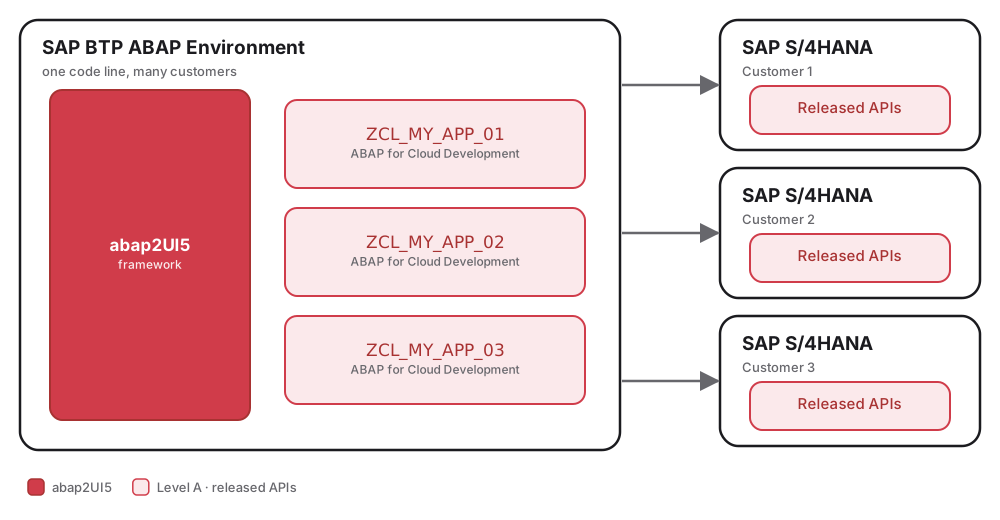
That is a real SaaS shape, in ABAP. One codebase, deployed once, serving several customer tenants — each with its own system, its own data and its own release, none of them needing anything installed. Nobody transports into a customer system, nobody schedules a downtime there, and a fix reaches every tenant at once.
It works because of what the earlier articles already established rather than because of anything added for it. The frontend is a shell that renders whatever arrives, so it does not care which system produced it. The app is one class with no artefacts beside it, so there is nothing per-tenant to deploy. And the state that makes a roundtrip work travels in the request, so no server holds a session belonging to one customer.
The limits are the ones the shape implies. Every tenant needs its released APIs reachable, latency is now on the wire, and the tenant's data boundary is something the app has to enforce rather than something the system enforces for it — one app now sees several customers.
A framework with nothing to install per system is a framework that can serve systems it was never installed on.
Happy ABAPing! 🦖🦕🦣