Use Cases
abap2UI5 fits many contexts, whether you work in a cloud-ready environment or with classic ABAP.
The sections below follow SAP's standard extensibility model. On-stack means the app runs inside your SAP system; side-by-side means it runs on a separate system (for example the BTP ABAP Environment) and calls your SAP system remotely. Within each approach, SAP defines three tiers by how "clean core" the extension is: Tier 1 uses only released, upgrade-stable APIs; Tier 2 wraps not-yet-released APIs behind your own released interface; Tier 3 uses classic, unreleased APIs — maximum freedom, but less upgrade stability.
On-Stack Extension
Tier 1 Extension
Build apps using only released APIs. They stay clean-core compliant, cloud-ready, and upgrade-stable: 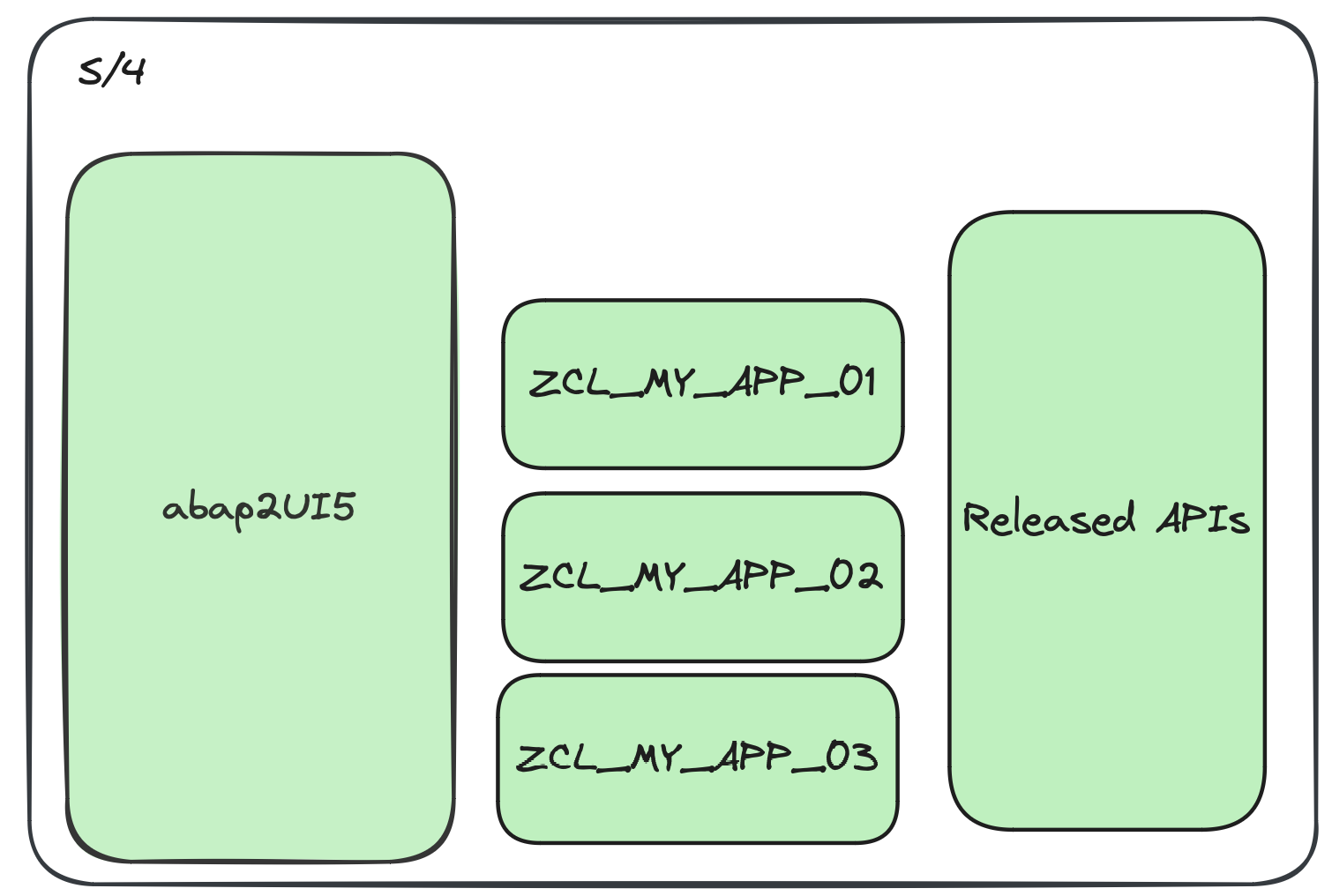
Tier 2 Extension
If certain APIs you need aren't yet released, you can still build a cloud-ready abap2UI5 app by accessing them via a separate Tier 2 wrapper: 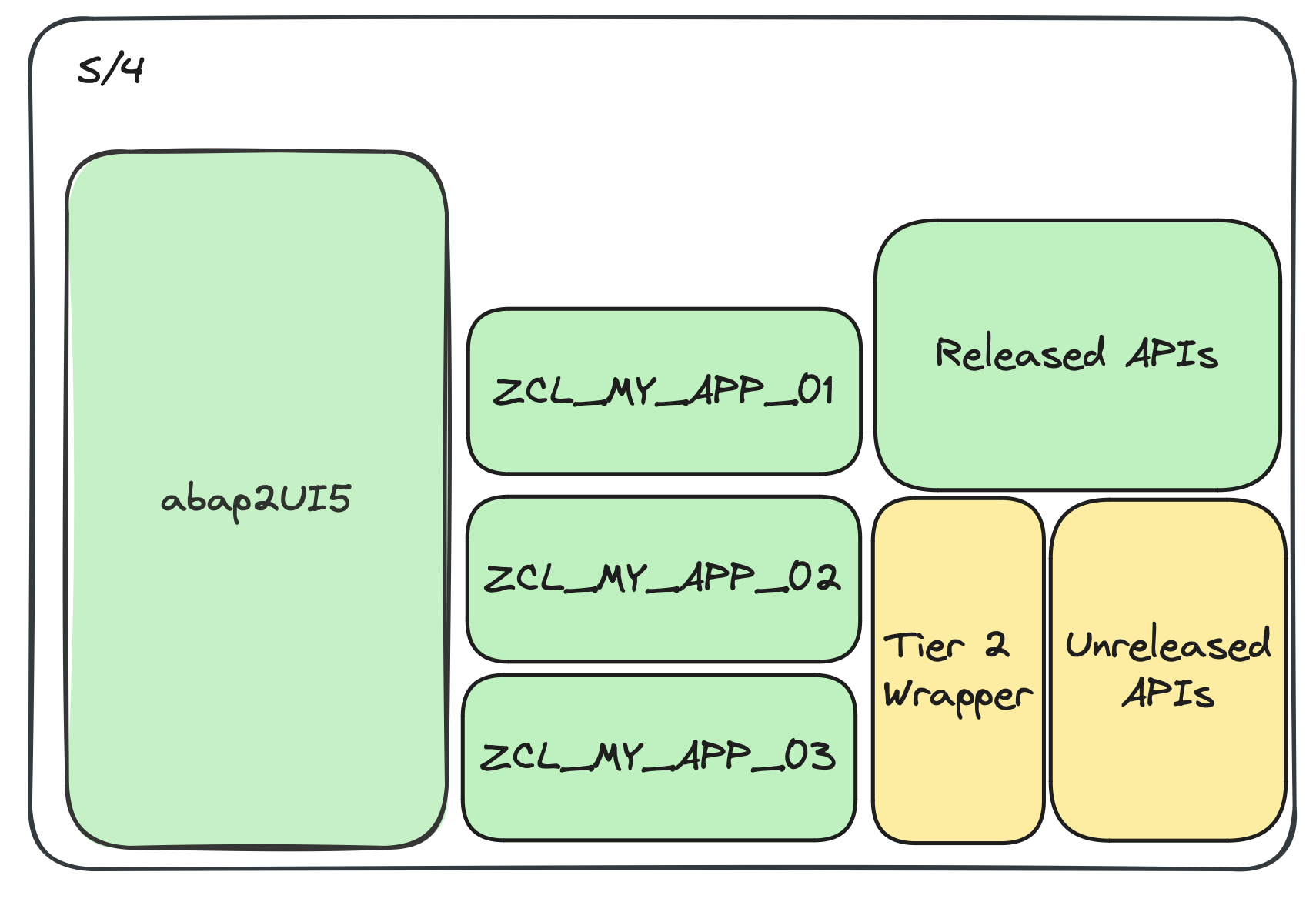
Tier 3 Extension
For a classic extension approach, use unreleased APIs for more freedom to customize and extend your system: 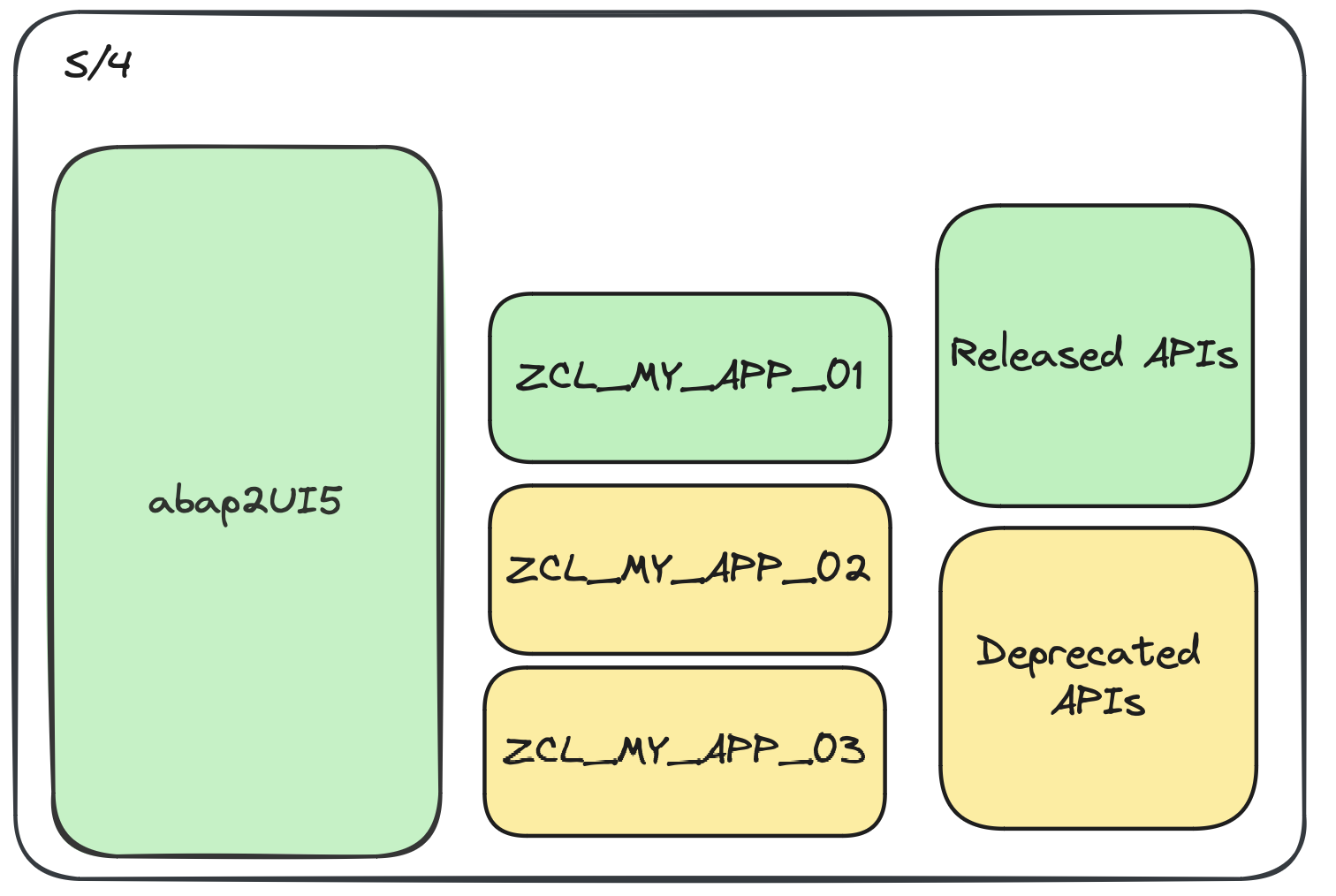
Side-by-Side Extension
Tier 1 Extension
Build apps separately from your S/4 system's lifecycle with remote API calls only. Stick to released APIs, and your apps will work with S/4HANA Public Cloud too: 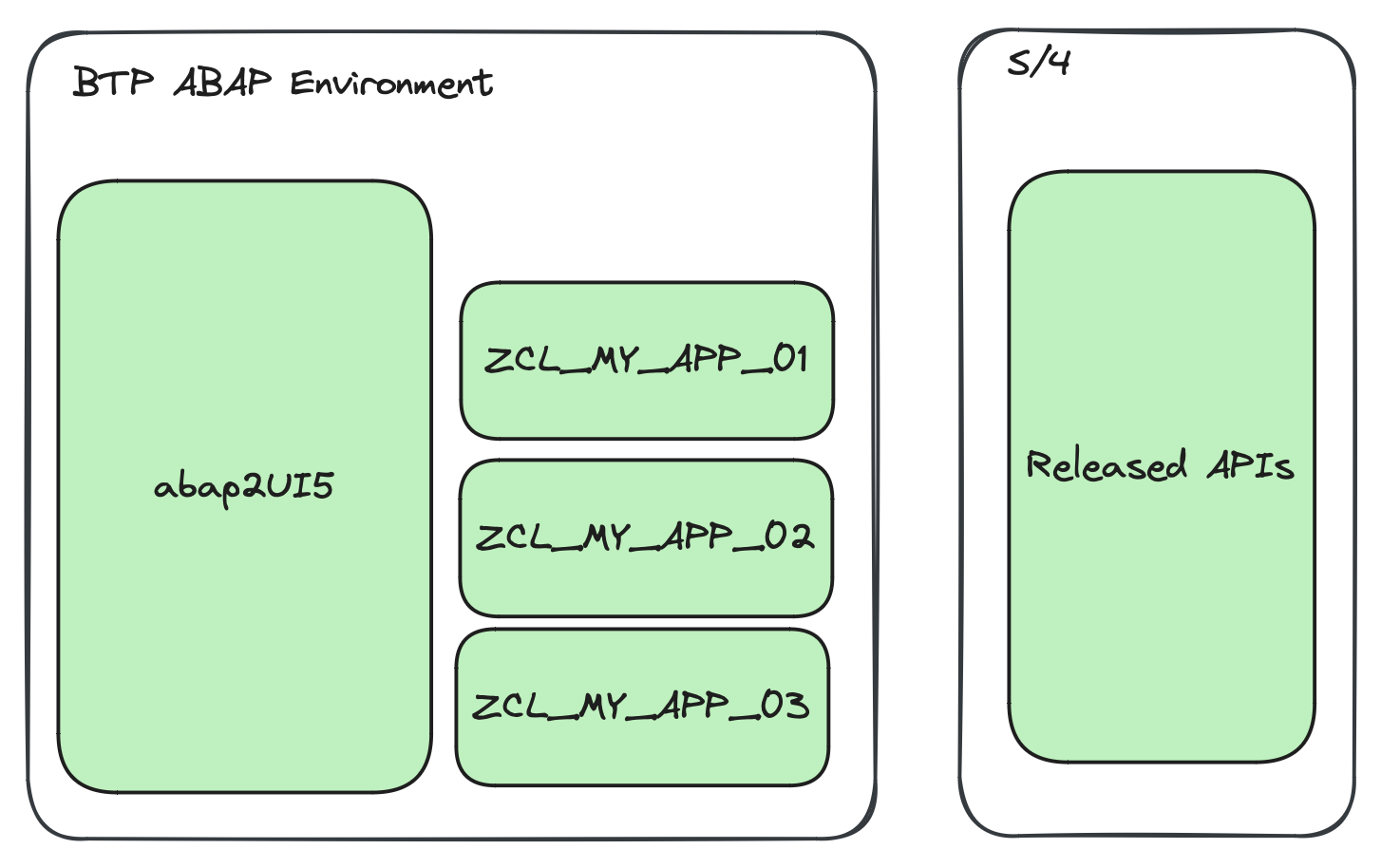
Tier 3 Extension
For more flexibility, build apps whose lifecycle is independent of your S/4 system, with remote API calls: 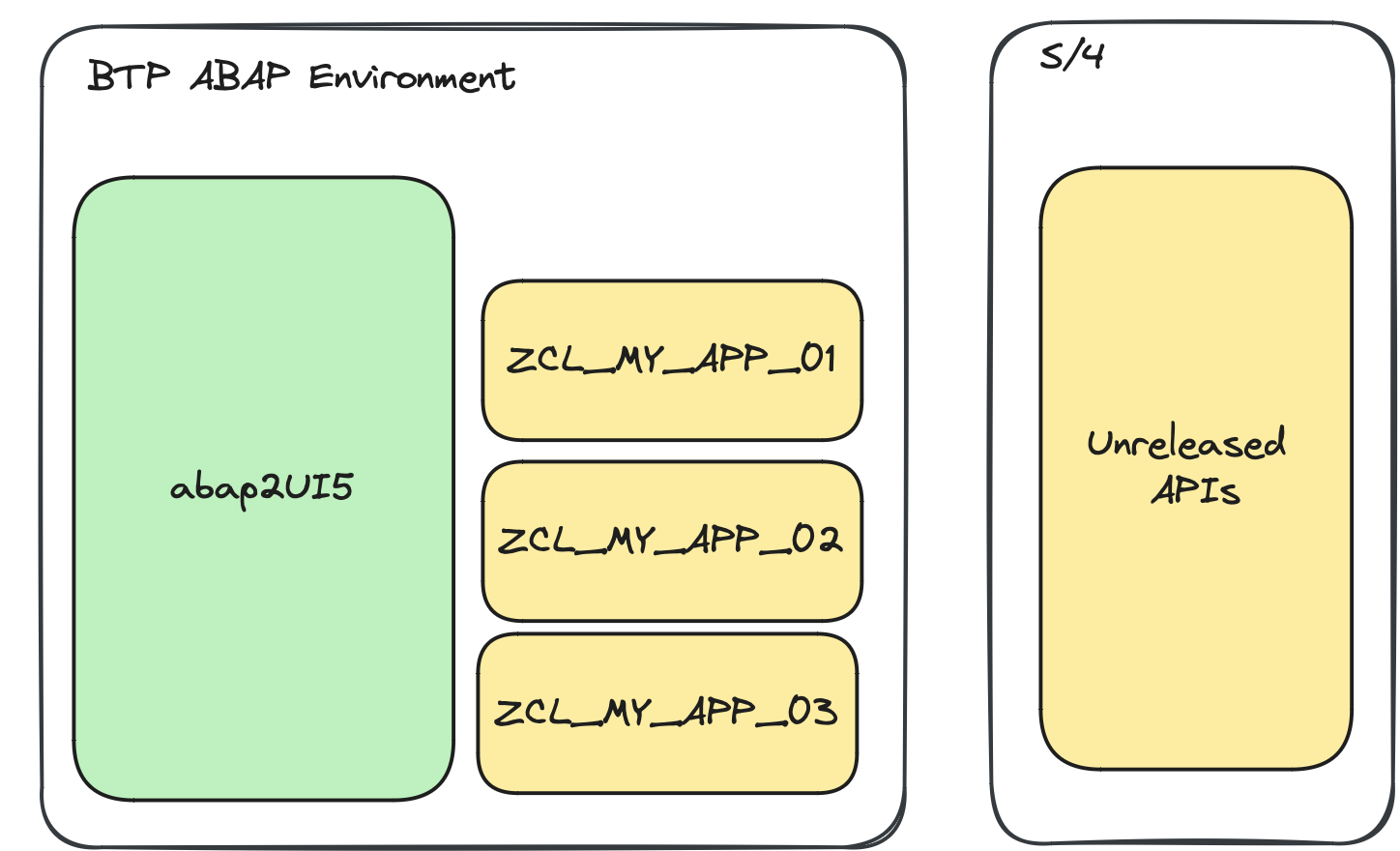
Software as a Service (SaaS)
With a Tier 1 side-by-side extension, you can connect a single abap2UI5 app to multiple S/4 systems. Use the same abap2UI5 code across customer tenants and remote systems for a real SaaS setup: 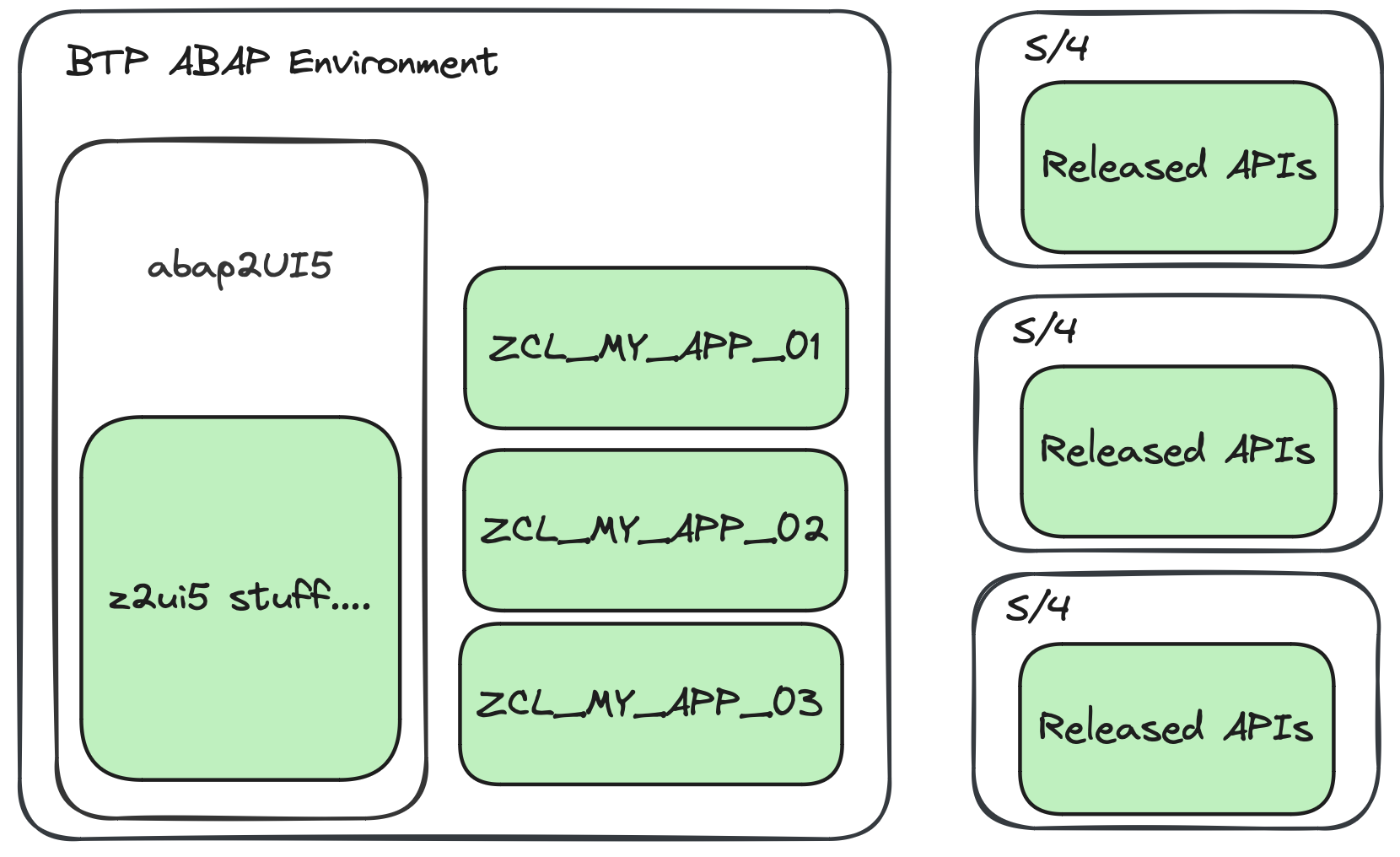
Further Reading
Background article with additional scenarios: Use Cases of abap2UI5 — an Overview.